
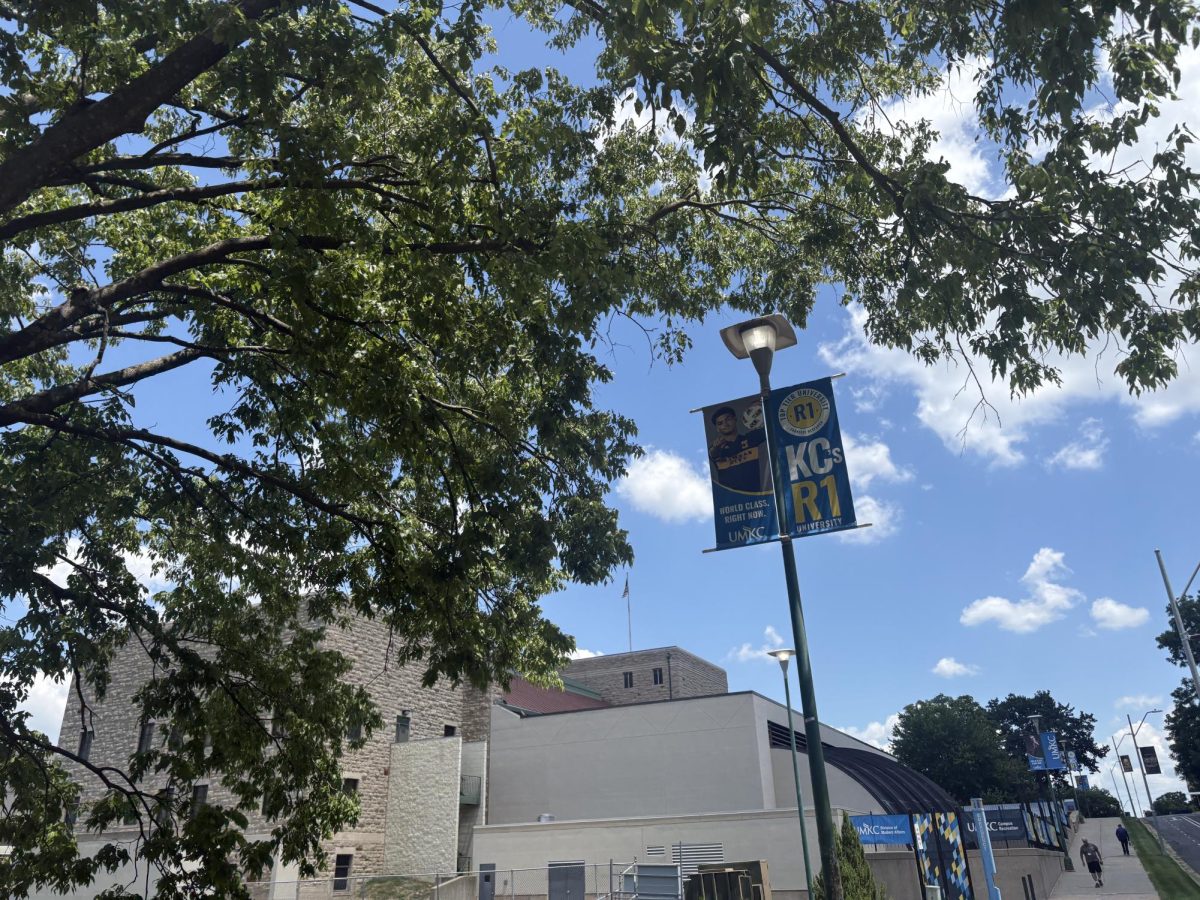
When the summer starts, most students take a break from classes, but for some UMKC faculty the work does not stop.
The summer provides professors free time to research, mentor students and focus on preparing for the upcoming semester.
“We spend much of summer planning for the next year, but also to do big picture projects that require a more hands-on approach that is harder to do during the semester when we are busier,” said Associate Director of Study Abroad and Global Engagement Ryan Ourada.
Throughout the summer many students are traveling with the countless programs that UMKC offers.
“Students are on faculty-led programs, programs at our international partner universities, internships, doing research and medical rotations,” Ourada said.
Earlier this summer Ourada took a group of students to Quebec City, leading students who have never traveled or had a passport before.
“We put a lot of effort into getting underrepresented students access to study abroad…we were able to take multiple students who never had a passport before or who had never been on a plane and that is something they never saw themselves doing,” said Ourada
While some faculty focus on traveling and running these programs, the biology department focuses on rigorous research and summer courses. Summer gives professors time to focus on specific research and papers.
“Having more time in the summer allows long-form experiments that require collecting data from animals at various time points and all-day techniques,” said biology professor Leonard Dobens. “Also being able to do the work assembling papers with figures and thinking through the analysis of these things makes the time in the summer a great time.”
Among Doben’s research this summer, another goal he has is to test out a new lab tool.
“I was eager to test a new tool the lab has built that is designed to observe under the microscope protein turnover in live animals, measured as a change in fluorescence,” said Dobens.
The summer allows him to focus on the outcomes of his experiments with that tool.
“This summer I finished experiments to demonstrate increased and decreased turnover using our genetic tools and I saw corresponding effects on green color in the fluorescent microscope,” said Dobens.
Turnover is the cycle of old proteins breaking down and being replaced with new proteins.
While spending time focusing on research and experiments is a focus for some faculty on campus, teaching summer classes is a big focus for others. For the faculty that continue to teach, it can feel like there isn’t much a difference between the spring and summer.
“Summer still feels busy because the classes are pretty intensive, so in some ways it isn’t really all that much different than the fall or the spring,” said anatomy professor Rachael Allen.
Teaching during the summer helps professors figure out how they will plan their classes for the fall and what they will include in their upcoming courses.
“I’ve been jotting down ideas for myself about the fall classes and there are definitely some changes that I think will be positive and should make the learning experience more intuitive for the students,” said Allen.
![[FILE] Roof blown off downtown business after storms on April 23.](https://kcroonews.com/wp-content/uploads/2026/04/Image-88-1200x900.jpg)



![[FILE] The sorority banners in the Student Union.](https://kcroonews.com/wp-content/uploads/2024/09/IMG_6328-1-1200x756.jpg)