
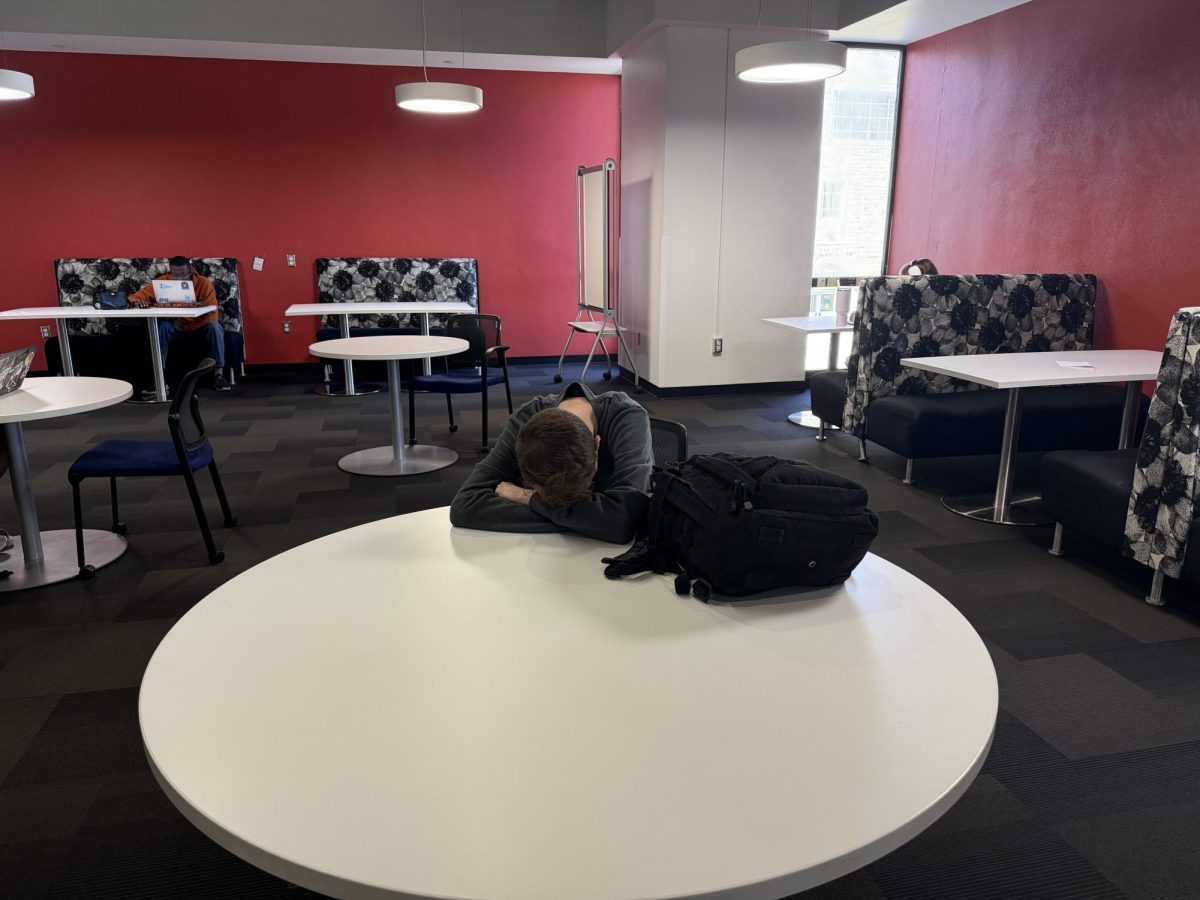
A recent study concludes that more than half of college students are lonely, raising questions as to whether UMKC students are independent or truly lonely.
With UMKC primarily being a commuter campus, students often attend class and leave, which gives them no time to form connections. Some UMKC students said being alone is a personal choice and not a circumstance.
“I do enjoy my space. I’m not going to say that I’ve gotten used to it, but I don’t think it’s a bad thing being alone sometimes,” said computer science senior Carleigh Andrew.
“I love my alone time and being by myself,” said sophomore business administration major Chio Aguilera.
Associate Professor Daniel Maitland, who runs the Study of Connection, Intimacy and Loneliness lab, explains that loneliness only grows in students if they don’t want to be alone.
“If someone is alone, loneliness would only come about if they really didn’t want to be alone,” said Maitland. “Just because someone is interacting with others doesn’t mean that they’re not lonely, as they might not be feeling connected to people at all.”
Studies show that commuters are more likely to feel lonely and depressed than residential students, but home life and social choices also play a factor.
“I think that loneliness in a commuter population likely depends on what their home life is like, do they still have old friends around? Do they have a family that fulfills social needs and what they’re doing on campus?” said Miatland. “Just because someone is living away from campus doesn’t mean they don’t take advantage of all the ways we build community at UMKC.”
Loneliness is not limited to commuters; students living on campus away from home can also feel lonely.
“I’m an exchange student, so I don’t have family here. I just have friends in here, and when friends are busy. Sometimes I can feel the loneliness,” said junior media and communication student JM Park.
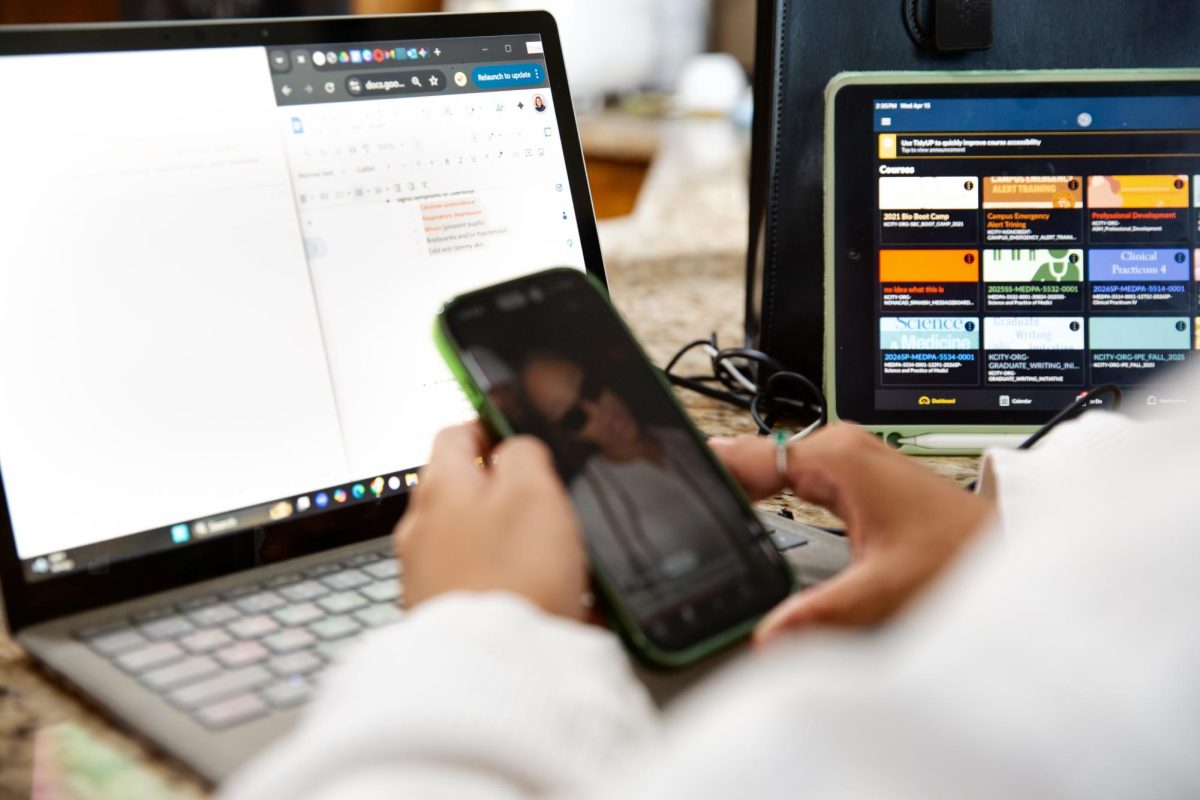
Students say that cell phone usage is also a factor that contributes to a loss of connection.
“I was trapped in an elevator for two hours, and I was yelling for help outside, and it was a clear big window too. Anyone could have seen me, but everyone passing by was stuck in their phone,” said freshman film major Jaylin Frederiksen.
Students who have the most screen time are also more likely to report feeling lonely, but many students are comfortable being alone and just on their phones.
“The current generation of students is extremely thoughtful about not disturbing others and, as such, might be hesitant to start up conversations,” said Maitland
Study findings show that COVID-19 plays a role in the rise of depression and isolation in college students. Experts warn that the loneliness and depression many felt during the pandemic can last after the pandemic ends, students today are now experiencing that as they navigate college life.






![[FILE] The sorority banners in the Student Union.](https://kcroonews.com/wp-content/uploads/2024/09/IMG_6328-1-1200x756.jpg)