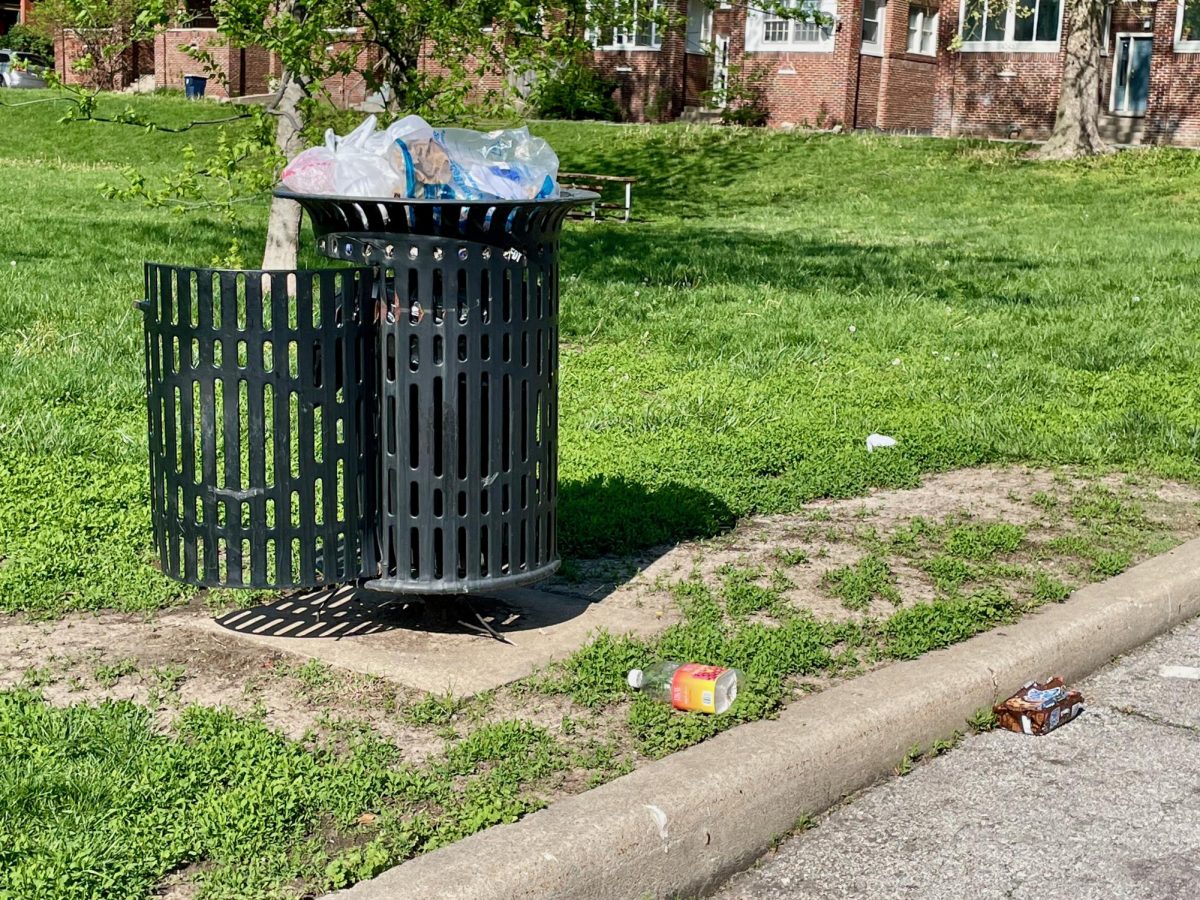
In preparation for the World Cup, Kansas City is undergoing several clean-up and improvement projects. Still, some residents remain concerned that the city’s waste management infrastructure won’t be able to support the influx of visitors.
“I hope they have a plan,” said Sina Sadeghi, a PHD student studying mechanical engineering at UMKC. “If they don’t add more trash bins, especially around the hotels and downtown, where most of the tourists are going, it’s going to be a disaster.”
The Missouri Department of Transportation (MoDOT), in partnership with volunteer groups and private contractors, has increased efforts to pick up trash along major highways and interstates. Meanwhile, city crews are focused on cleanup in areas around the stadium and in areas expected to see high visitor traffic.
In addition to cleanup efforts, the City Manager’s office is overseeing a number of projects through Match Ready KC. These projects are aimed at neighborhood beautification, public safety and infrastructure improvements.
However, according to a representative from Kansas City Public Works these improvements will not include additional trash bins.
“There will be no additional trash cans added at this time. If litter becomes an issue, Public Works is ready to address the situation,” a KCPW representative wrote in an email.
Kansas City has struggled to keep litter in check for a number of years.
In 2023, MoDOT spent nearly $14 million to clean up litter on state highways. The KCPW rep. said that a lot of the city’s litter stems from improperly secured loads on vehicles traveling on highways.
“Kansas City has a lot of highways, some of which cut through residential areas, so this contributes to a lot of the litter seen on and around those areas.”
Illegal dumping and household trash are also significant sources of litter seen around the city. A 2021 audit of Kansas City’s illegal dumping operation program found that resident satisfaction with the city’s efforts to clean up illegal dumping was at just 20%.
UMKC Professor Emeritus of Environmental Science Dr. Syed Hasan says that Kansas City’s litter prevention efforts should focus on public education and accessibility.
“The placement of bins is really important,” Hasan said. “One thing about waste, if you want people to help with the collection of litter and recyclables, you have to make it as convenient as possible.”
Making waste disposal convenient has been a challenge for the city, particularly around bus stops. A 2023 report from the Kansas City Star found that only 17% of bus stops have trash cans.
The Kansas City Area Transportation Authority(KCATA), which is responsible for the maintenance of all bus stop trash cans, prioritizes amenity distribution based on passenger activity level. This means that a bus stop must see at least 25 riders per day in order to qualify for a trash can.
The city took a big step in 2024 with the introduction of residential trash and recycling carts. The carts were meant to cut down on litter caused by wildlife, while also expanding the city’s recycling program.
The Department of Public Works notes that it has seen fewer reports of illegal dumping since the programs launched, but some residents living in large apartment complexes say the carts are less than ideal.
“I know in my area they could put out another garbage bin, because it’s literally just one,” said senior computer science major Carleigh Andrews. “There’s literally just one. When that one’s full, where does the rest of the trash go?”
In 2022, the city adopted the Climate Protection Resiliency Plan, which aims at identifying ways the city can lower greenhouse gas emissions, curb illegal dumping and increase recycling through targeted education and community outreach.
Residents interested in helping with waste removal can sign up to volunteer through MoDOT’s Keeping Missouri Beautiful campaign. Additionally, residents are able to report illegal dumping through the myKCMO app, or by calling 311.


![[FILE] Roof blown off downtown business after storms on April 23.](https://kcroonews.com/wp-content/uploads/2026/04/Image-88-1200x900.jpg)