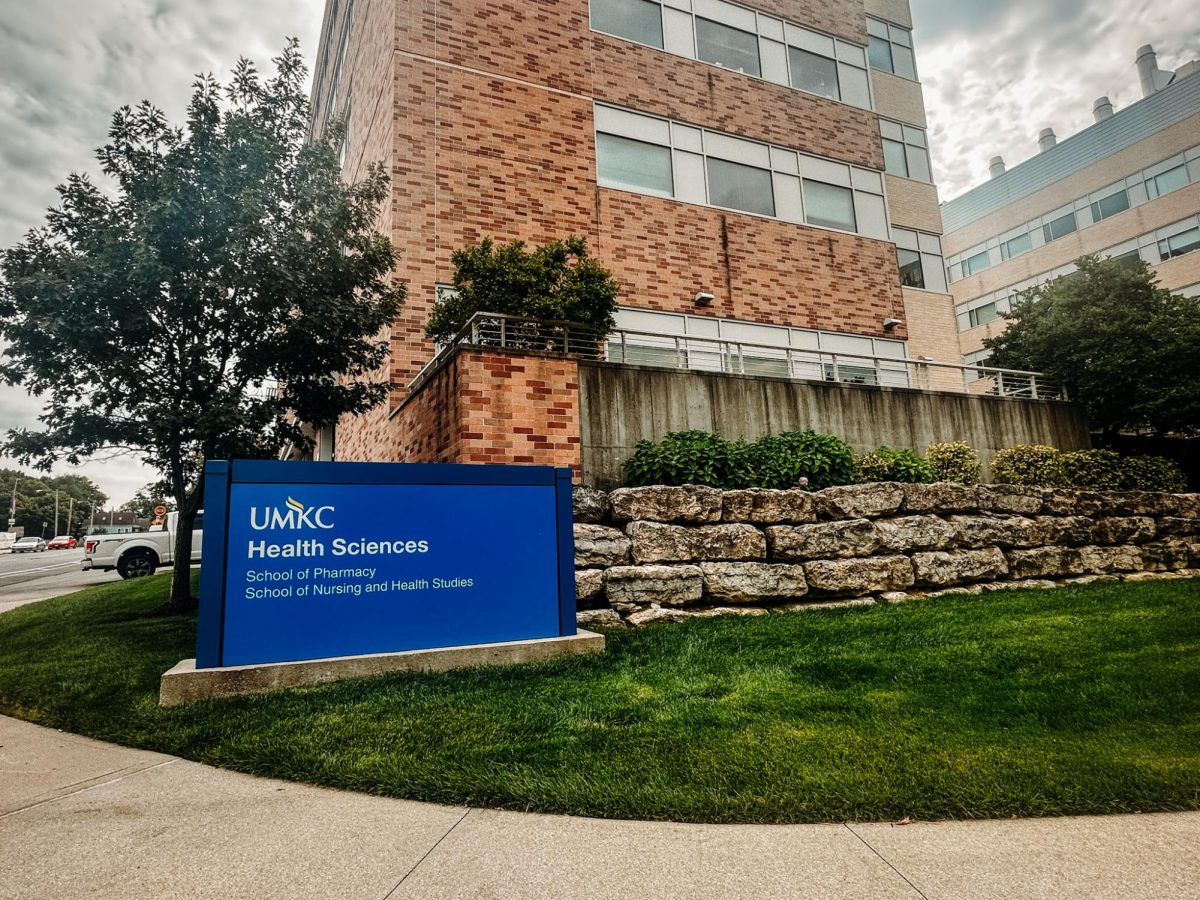
The Bachelor of Arts and a Doctor of Medicine degrees, or the six-year med program, at UMKC is shaving two years off the traditional schooling for becoming a doctor.
The B.A./M.D. program was established in 1971 and is known for its strict academics. It also does not have the traditional pass-fail system of more than 80% of med schools.
The first two years are mostly undergraduate courses with students having the option of a bachelor’s in liberal arts, biology or chemistry. The last four years account for the med school portion with clinicals and medical rotations.
“A lot of people believe the program is either really rigid or really easy, and it’s neither. It’s just an alternative path,” said Nivriti Varanasi, a second-year student in the program. “We’re put through harder classes faster and have to take more classes at the same time. I wouldn’t say you’re putting in more or less work, it’s just different types of work.”
While the traditional eight-year undergraduate and medical school route is what many students in the UMKC School of Medicine take, about 110 each year are from the six-year med program, making it highly competitive.
This program is one of 25 nationally that allows students to go directly from undergraduate into medical school without having to take the Medical College Admission Test (MCAT). Of those who take the exam, 95% of them will take it an additional time before getting their desired score.
“Getting that reassurance out of high school that I am going to be a doctor at the end of this, it’s a relief. With six years, the guarantee of going to med school was a huge role for me; I didn’t want to lose motivation,” said Shannon Mathew, a fifth-year B.A./M.D. student.
An additional part of the School of Medicine is the docent system, which allows any medical student to have a faculty physician to guide them during their time at UMKC.
“I think it cuts out a lot of the fluff. The population that’s in the program are people who know medicine is their end goal. We don’t really need four years of undergrad to figure that out, I think that within itself should be celebrated,” said fifth-year B.A./M.D. student Sarah George.
Artificial Intelligence use is common among medical students using it to aid their studies. Around 66% of physicians reported using A.I. in their respective fields despite the environmental implications.
“For healthcare professionals, it connects to all the research databases. I think it’s supposed to make it easier to follow evidence-based medicine, but on the same hand you don’t want to lose critical thinking skills. It’s just a tool that needs to be used right,” said Madison Melton, a fourth-year B.A./M.D. student.
The future of the program includes the Healthcare Delivery and Innovation Building on track for completion in 2027, and the brand new St. Joseph Medical School Building, completed in Aug. 2025.
The six-year program includes year-round schooling, and medical students are still required to pass Step One and Step Two exams in their fourth and sixth years, respectively.
“People look down on us because we’re so young when we graduate, that’s not a disadvantage. You have energetic doctors, that’s what you want,” said Varanasi.



![[FILE] Roof blown off downtown business after storms on April 23.](https://kcroonews.com/wp-content/uploads/2026/04/Image-88-1200x900.jpg)




![[FILE] The Starbucks in the Student Union.](https://kcroonews.com/wp-content/uploads/2024/10/Edited-1-7-1200x900.jpg)
![[FILE] One of the baby shirts apart of the Clothesline expressing a firsthand account of sexual assault.](https://kcroonews.com/wp-content/uploads/2025/10/lc-5-1200x900.jpg)