UMKC partnered with Honeywell Federal Manufacturing & Technologies (FM&T) in 2017 to develop research and new technology for national security. Now, some students are questioning whether that relationship should continue.
Honeywell FM&T manages three sites for the U.S. Department of Energy and the National Nuclear Security Administration, including the Kansas City National Security Campus (KCNSC). In addition to safeguarding domestic nuclear weapons, KCNSC produces an estimated 80% of the non‑nuclear components for U.S. nuclear weapons, including electronic, chemical and engineered material parts.
“I want to be angry about their affiliation, but what is there to expect?” said a senior studying information technology. “Universities are a business, and making a profit is their goal, not exhibiting morals.”
The student said the assurance of job stability and security often entices individuals to work for companies like Honeywell. However, she stated that UMKC needs to push better initiatives, causes, and companies to students and faculty.
Isaac Fleer, a senior in electrical and computer engineering, said that the criticism isn’t justified. He argued that Honeywell FM&T allows students and faculty to make significant contributions to their fields, with almost 600 engineering positions open nationwide.
“Nuclear weapons are not going anywhere,” Fleer said. “If we have to have the weapons, I will feel a lot better knowing that the engineers entrusted with them are supported by their university and that their alma mater made it possible by having a good relationship with that company.”
In 2018, the U.S. Department of Defense’s Office of Naval Research funded the university $14.9 million for counter-drone technologies. They issued this funding as the largest non-health research award received at UMKC.
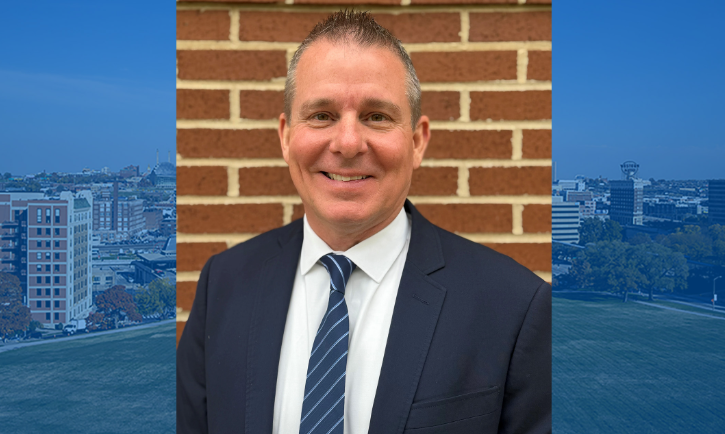
But UMKC has expanded its research efforts since. Anthony Caruso, vice chancellor for strategic initiatives, founded the Missouri Institute for Defense and Energy (MIDE) at UMKC, which has secured $80 million in funding since 2019. His focus has pivoted from defense technology, including nuclear detection, to domestic manufacturing for microelectronics products.
Alyssa Lally, UMKC assistant spokesperson, said that “there is nothing to add to the story from 2014.”
Kaleb Smith, a sophomore studying civil engineering, stated that the funding amount ultimately outweighs sociopolitical concerns.
“In military engineering especially, there seems to be a trade-off between lucrativeness and morality,” Smith said. “I believe a student choosing to work at Honeywell is more of a reflection of their character than a consequence of [Honeywell] being present at the career fair.”
Ryan Peters, a junior in civil engineering, said he only sees benefits in the partnership. Peters added that the university should build more connections to increase the hiring rate of post-graduates, and that students have the agency to apply or not.
“Part of having a diverse community of students means a diversity of thought needs to exist and be encouraged to thrive here on campus as well,” Peters said. “We should not eliminate partnerships and collaborations that can assist students with getting jobs post-graduation, especially considering in the interesting economy we are currently experiencing.”
In 2025, Honeywell FM&T recruited roughly 1,700 interns and co-ops at universities, with nearly 80 percent of interns rejoining Honeywell as full-time employees or returning interns. Starting pay for 2026 summer interns is estimated between $20 to $42.
Logan Dudley, a biology and chemistry senior, stressed that engineering students expressed issues finding well-paying positions outside the arms industry.
While Dudley supports universities working with various industries, he said that the Honeywell partnership may introduce a pipeline for engineering students and funnel people away from non-violent career paths.
“It feels a little predatory to partner with a known defense contractor whose primary purpose is to invent more efficient ways to kill people,” Dudley said. “There are plenty of other engineering companies UMKC could partner with. Why one that makes nukes?”
However, Isaac Woodward, pursuing a dual degree in mechanical engineering, said that criticisms of nuclear weapon manufacturing are misguided, despite being held in good faith.
“Honeywell makes it clear during their interview process what you would be working on if you join them,” Woodward said. “Nuclear weapons are obviously an evil, but I think it’s highly impractical to suggest that a country needs to stop making and maintaining them.”

![[FILE] Roof blown off downtown business after storms on April 23.](https://kcroonews.com/wp-content/uploads/2026/04/Image-88-1200x900.jpg)