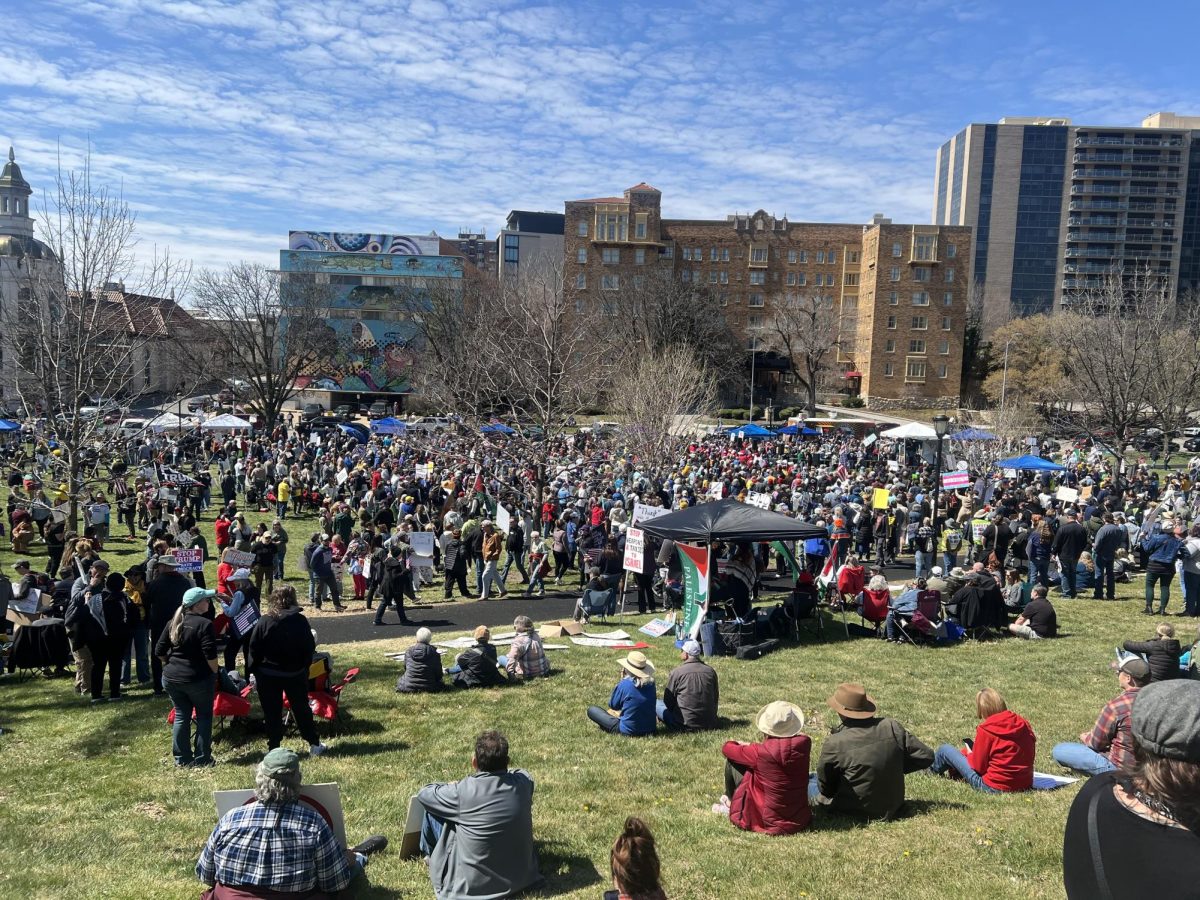
The first phase of the Israel-Hamas ceasefire deal concluded on Oct. 13, but debate over Palestine’s future continues.
The ceasefire deal led to the release of over 2,000 Palestinian detainees by Israel on Monday morning. In exchange, Hamas freed the remaining 20 living Israeli hostages.
The agreement coincided with the International Peace Summit in Sharm el-Sheikh, Egypt, co-hosted by U.S. President Donald Trump and Egyptian President Abdel Fattah al-Sisi. This conference was billed as an effort to end the war in Gaza.
Despite the summit’s goals, severe humanitarian conditions persist.
“There is fighting on two sides – the side of the world, and the side of eating some food to survive,” said Mohammed Al-Daour, local Palestinian TV Reporter with Al-Ghad Channel.
Widespread damage to housing infrastructure persists over the Gaza Strip, according to Journalist Noureddine Totah Abu Karim of Al Manara Media. Abu Karim lost his apartment in a targeted strike and now lives in a crowded tent with his extended family.
Kamran Choudhry, 27-year-old organizer of The Party for Socialism and Liberation KC (PSL), said that Trump prompted the ceasefire.
“It probably sounds like a temporary thing, an opportunistic thing,” Choudhry said. “It just goes to show how easy it is to actually get the ceasefire.”
Over 83% of the Gaza Strip remains under displacement orders and within the Israeli-militarized zone since Oct. 1, according to the U.N. Office for the Coordination of Humanitarian Affairs (OCHA).
Amy Ameis, 2009 UMKC graduate and leader of KC Tenants Ceasefire Team, said that food security has declined amid border controls, food blockades and soaring prices. Al-Daour said that a 25-kilogram bag of flour is at its highest price, marking a nearly 9,900% increase in food costs since the blockade in March 2025.
“All of the Gazans have lost their jobs, so they don’t have any income. They don’t have any basic needs to survive,” Al-Daour said. “They are trying to find anything to keep on in this life.”
UMKC students expressed a mix of hope and concern about Palestine’s future. Senior chemistry major Brock Johnson said that he feels hopeful following the exchange of prisoners on Monday.
“I think a lot of people want peace right now, especially with all the uncertainty in the world,” Johnson said.
Many students recognize that lasting peace in the region is still far from reach, emphasizing the need for humanitarian aid.
“I feel like [Palestinian] rights have been, like, revoked from them,” said UMKC junior business administration major Emily Sanchez-Guzman. “As long as they get their peace back – their everyday lives, their education, their work – whatever to the normal lives again that would probably bring you to peace.”
Samuel Lamar, senior history major and President of the Young Democratic Socialists of America (YDSA), said that they “would like to see a full retreat of Israeli forces.”
Lamar also expressed doubt that anything significant would change for the Palestinian people, noting the Israel Defense Forces (IDF) attack on the 2010 Gaza Freedom Flotilla – a reminder of the long-standing conflict and instability in the region.
“I mean, it might get worse,” said Lamar. “Trump is talking about sending U.S. soldiers there to keep the peace.”
Israeli forces continue to open fire on the Gaza Strip days after the ceasefire agreement. Reports on the Abu Shebab gang murder of Palestinian journalist Saleh Aljafarawi occurred three days after the deal was announced.
“Before we are journalists, we are humans,” said Journalist Al-Ghani Billah Ruqa of Al Jazeera. “Our country needs us more than ever. Journalists have been killed directly, and the entire world was watching without anything to do. But journalists will find ways to translate the message.”
Interviews of Palestinian journalists are part of The Liberation Film Series: Watermelon Dialogues, hosted by the KC Tenants Ceasefire Team, alongside the Party for Socialism and Liberation KC (PSL) and Al-Hadaf KC.
Arabic to English translations were done by Mohammad Odeh of the West Bank.
![[FILE] Roof blown off downtown business after storms on April 23.](https://kcroonews.com/wp-content/uploads/2026/04/Image-88-1200x900.jpg)

![[FILE] The Starbucks in the Student Union.](https://kcroonews.com/wp-content/uploads/2024/10/Edited-1-7-1200x900.jpg)
![[FILE] One of the baby shirts apart of the Clothesline expressing a firsthand account of sexual assault.](https://kcroonews.com/wp-content/uploads/2025/10/lc-5-1200x900.jpg)