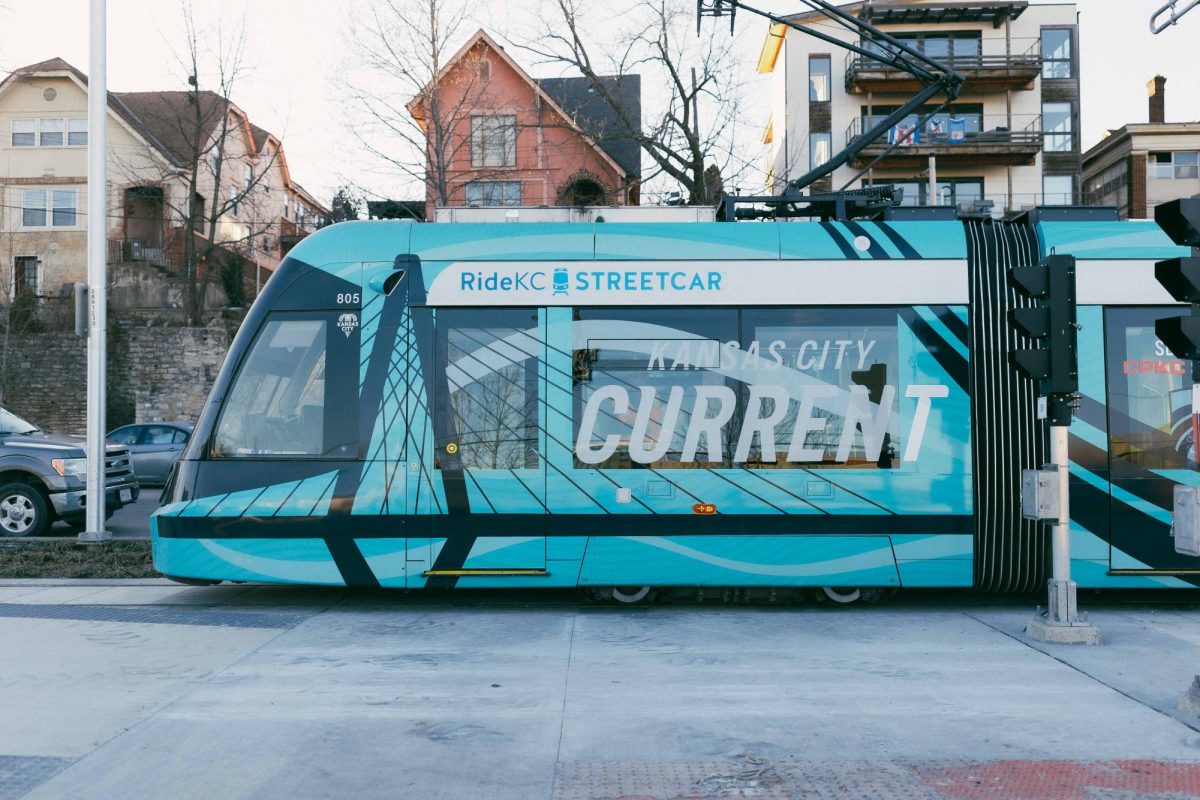
At one point in time, Kansas City boasted a robust streetcar system containing 25 different lines at its peak that spanned throughout the entirety of the city. Today, that number stands at merely one line.
Though the Ride KC Streetcar line is appreciated and has recently seen an extension, it is far from what it needs to be in order for Kansas City residents to be able to rely entirely upon it to get around.
Ashley Trotter, a vocal performance major, said that she wished the streetcar would be expanded into lower-income areas where she lives.
“You can kind of just tell it’s the lower-income areas that are forgotten about,” Trotter said. “Public transit is kind of not accessible. There are bus stations where I live, but they’re scary.”
How did a city that once had a streetcar system with 25 lines end up with only one?
Sunyop Kim, a professor of urban planning at UMKC, emphasized that the issue is far more complex than one might believe at a glance.
“Transportation is basically the reflection of culture and economic systems,” said Kim.
He explained that 100 years ago, Kansas City was planned with public transit in mind because the culture and economic circumstances of America at that time were conducive to such urban planning.
The population of Kansas City 100 years ago was much smaller and less spread out, and many people did not have a car, also contributing to urban planning that was much closer together, according to Kim.
Kim said the rise of automobiles, America’s individualistic culture, and the post World War Ⅱ economic boom combined with white flight to the suburbs all contributed to areas of Kansas City being torn down or redeveloped with a car-centric design.
Kim said that gentrification has to be taken into account when discussing urban redevelopment in Kansas City.
“When an area gets an upgrade, like a streetcar, it can raise rents in that area and displace the original inhabitants,” Kim said. “We want to share the benefits, but that is very difficult.”


![[FILE] Roof blown off downtown business after storms on April 23.](https://kcroonews.com/wp-content/uploads/2026/04/Image-88-1200x900.jpg)